Amiga 500 Side Expansion Slot
In short, the Amiga 500 expansion port was an exact electrical equivalent of the expansion port of Amiga 1000, and very similar to the Zorro II card slots of the Amiga 2000 and above. The Zorro II card slots of the Amiga 2000 and greater models had 14 extra pins compared to the Amiga 500/1000 expansion port. System RAM will be increased from the standard 1MB (1 megabyte) to 2MB (2 megabyte). Installation is straight forward process: simply slot the A500™ memory expansion into the trapdoor slot. The trapdoor bay is covered by a small plastic door underneath the Commodore Amiga 500 computer which can be easily levered open. Many later games required the half meg memory expansion (a full 1MB of fast ram) in order to play them. 512KB of Fast RAM can be added to the Amiga 500 and 500+ using the trapdoor expansion slot. This is a simple upgrade that can be completed in just a few minutes with no tools or soldering required.
- Amiga 500 Side Expansion Slot Car
- Amiga 500 Side Expansion Slots
- Amiga 500 Side Expansion Slot Machines
- Amiga 500 Side Expansion Slot Machine
- Amiga 500 Side Expansion Slot Pinout
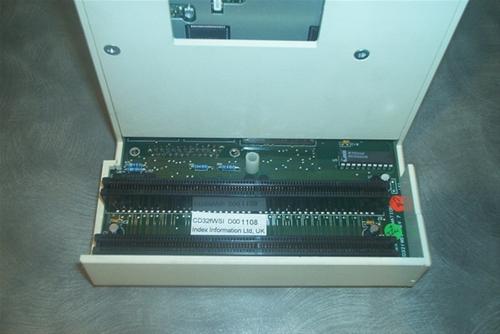
The CommodoreA1060 Sidecar is an expansion hardware device developed by Commodore and released in 1986 for the Amiga 1000 computer. It features a complete PC XT-clone system mounted in an expansion case which connected to the expansion bus on the right side of the Amiga 1000 computer, sitting beside it similar to a motorcycle's sidecar, hence the name.
The PC side of the Sidecar was built around an Intel 8088 processor. All I/O procedures from the PC side are performed by the Amiga. Software was included to allow data to be exchanged easily between the PC and the Amiga side of the system. The Sidecar was available with an internal hard disk which was accessible from both the MS-DOS and AmigaOS environments. This was the first hard drive produced by Commodore for the Amiga.
Video display and user input were performed through the Amiga's monitor, keyboard, and mouse. This allowed the user to control both computers simultaneously.
I am an Amiga 500 owner with several questions and ideas as far as expansion goes. I, at one time, owned an Expansion Tech Tool Box (2 2000 slot's with power supply) card cage with a Kronus hard card and 32 MEG Seagate Drive installed in it. I sold that and am again looking to expand my system.
Characteristics[edit]
The Amiga Sidecar was a complete IBM PC XT system, with the exception of I/O devices and operations (which are handled by the Amiga). Specifications include:
- Processor: Intel 8088 clocked at 4.77 MHz
- RAM: 256 kB (expandable to 512 kB + 80 kB Dual Bus Memory)
- Graphics Emulation: Dependent on Amiga settings. (can use real 8-bit ISA graphics cards)
- Sound Emulation: Dependent on Amiga settings. (can use real 8-bit ISA sound cards)
- One internal 5.25' drive bay (normally fitted with a 360K 5.25' floppy drive)
- 3 x 8-bit ISA slots (for using real PC cards)
- Amiga 1000 Expansion Bus connector (for Amiga connectivity)
- Additional slot for an 8087 numeric coprocessor [1]
History[edit]
Early in its life, the Amiga was strong in entertainment and graphics software but lacked general productivity software such as word processors, spreadsheets and database software. These are the areas where the de facto business standard IBM PC excelled. Commodore's intent was to let the Amiga take advantage of PC compatibility to shore up its weakness in this category of software.
Bruce F. Webster wrote in the October 1985 issue of BYTE, after seeing the Amiga for the first time:[2]
The 86-pin [expansion port] gives whatever is sitting out there complete control of the machine (if it wants control). The disk-controller hardware can already handle 5¼-inch drives ... the keyboard is sufficiently populated [to] support most MS-DOS programs, and the screen resolutions (320 by 200, etc.) are, by an amazing coincidence, identical to those for most IBM graphics cards. How hard would it be to build a box with the necessary CPU and ROMs that would turn the Amiga into an IBM-compatible machine? Not very hard, I would think—certainly not as hard as it has been for the folks at Dayna Communications to get MacCharlie, which attempts to get the Mac run MS-DOS software, up and running.
Webster, in September 1986, noted the Sidecar's announcement as fulfilling his prediction.[3]Jerry Pournelle that month named the Sidecar his 'number one pick of Spring COMDEX, stating that 'it was eerie to watch Flight Simulator running as if on a PC and still see the famous Amiga bouncing ball in the background and a word-processing program running in the foreground'.[4]
Amiga 500 Side Expansion Slot Car
The Sidecar was developed by Commodore Germany, as was all of the Commodore PC-architecture based development. It was relatively expensive and it required a non-trivial amount of desktop space compared to the Amiga 1000 by itself. The device was also taller than the Amiga 1000, which made it seem even more aesthetically disconnected from the main system.
Besides the high price and the aesthetic issues, other factors contributed to the Sidecar's lack of adoption. The Amiga 2000 provided internal expansion slots, allowing the optional Bridgeboard card to replace the functionality of the Sidecar without needing a bulky external chassis. The popular Amiga 500 could not be used with the Sidecar at all, due to the expansion slot on the A500 residing on the left side of the chassis, as opposed to the right side on the A1000. Also, decent business and productivity software began to be released for AmigaOS, reducing the need to run MS-DOS applications on the Amiga.
This concept was continued in the later Amiga 2000 unit, containing four ISA slots intended for PC emulation expandability. Two slots were in-line with the Amiga Zorro II bus to allow installation of a Bridge board which, like the Sidecar, provided the core chipset of a PC on an expansion card, connected to both the Amiga and PC bus.
See also[edit]
References[edit]
- ^Halfhill, Tom (August 1986). '16-bit Explosion'. Compute!. Retrieved 6 June 2017.
- ^Webster, Bruce (October 1985). 'Commodore's Coup'. BYTE. p. 147. Retrieved 27 October 2013.
- ^Webster, Bruce F. (September 1986). 'Two Fine Products'. BYTE. p. 346.
- ^Pournelle, Jerry (September 1986). 'A Busy Day'. BYTE. p. 321.
External links[edit]
Update: I'm having trouble with the Kipper2k board popping off the socket at the slightest move. I will add some text on how to ensure it doesn't when I get more info. If you've solved it let me know!I call these expansions enablers, because it used to take quite a bit of work and money to find the right hardware and building up the knowledge to set up a 'harddisk system'. Also, various transfer methods for getting files onto the harddisk was a
Amiga 500 Side Expansion Slots
pain to get working.Now, two products made in 2013, costing 50 or 80 EUR ($68 or $107) allow you to do both these things, saving a lot of hassle!The ACA500
I reviewed the ACA500 some months ago - it's an external board that you plug into the side of the Amiga 500, insert a CF card, and you're ready to go! It has 2MB RAM and a 14MHz 68000 CPU.Read the review to find out more about ACA500's features. I wanted this article to show how to install Kipper2k's expansion, step by step with pictures.Kipper2k's 8MB+IDE
This expansion has 8MB RAM and is an internal expansion that uses your existing 7MHz 68000 CPU.This means you have to open your Amiga - with a Torx #10 (2.5 metric) screwdriver. I've written some text to make the guide complete, but don't be afraid - it's really not very hard to install this board.In summary, these are the steps to upgrade your Amiga 500 to a 'harddisk' system with lots of memory:- Plug the board into the CPU slot, and put the CPU on the board
- Solder a two-pin connector to the motherboard
- Partition and Amiga-format a CF card and install Workbench on it
Amiga 500 Side Expansion Slot Machines
1. Open the case, remove the shield
Disconnect all cables from your Amiga.If the steel RF shield is covering the motherboard, it needs to go. Otherwise the board will not fit. Use a thin, flat screwdriver to raise the flaps holding it straight up, and remove the screws holding it.Take this opportunity to check for battery leakage! If you have an A500+, there's a barrel battery next to the trapdoor connector. If you have a trapdoor RAM expansion installed that has a battery, check that also. If they have leaked, remove them and clean any residue with alcohol. Your Amiga runs fine without a battery, and later you can get a replacement battery.
2. Remove the CPU, straighten its pins
Put first a small flat screwdriver, then a bigger one, between the socket and the underside of the CPU, wiggling at either end. When it's coming loose, make sure the CPU goes out of the socket as straight up as possible - put a finger on the chip to prevent one end from rising too much.To fit easily in the new socket, the pins must be 90°, like in the small closeup. If they are more like 100°, bend the pin row carefully against the table, put the chip on that pin side, hold it vertically with both hands, and push away from you gently. If a pin is bent sideways, bend it back gently with flat pliers.
You may want to take this opportunity to upgrade your Kickstart ROM chip! If you have Kickstart 1.3, you will need to boot to the harddisk from a floppy disk. Kickstart 3.1 is the best choice and allows you to run the latest Workbench with recent add-on software.
3. Insert board into CPU socket, insert CPU into board socket
The sockets of this board use round pins and holes, so you must use both care and a little force. Insert the board into the motherboard CPU socket, matching up the U-shaped notches. Press down firmly and make sure you don't get a bulge - all pins should go equally deep into the socket.Place the CPU into the board's socket, again matching up the end U-shaped notches, and just put your fingers lightly onto the CPU. Make sure all
 pins match up to the holes - guide them with a tiny screwdriver if necessary - and then press the CPU down into the socket.
Note the two-pin header left of the Amiga - the IDE signal patch cable must be connected before we can start the Amiga.
4. Solder the two-pin header to the motherboard
This is a view of an upside down Amiga, seen from the expansion connector with the flap open.
Here, I put the header back on the cable, so it would be easier to see how I should orient it before I soldered.
Orientation is important! The cable uses two colored wires. Look at the wire color to the frontmost pin on the board. Make sure the same color is connected to the frontmost pin when the header is soldered to the motherboard. These pictures show it in more detail.Then I held it, flipped the Amiga for easy soldering, and bent the legs a little to prevent the header from falling out.
5. Insert a CF card and power on!
These pictures show the specifications of the Kipper2k 8MB+IDE.Now, preparing an Amiga-formatted CF card is a separate chapter that requires more knowledge than this hardware installation. You could a) buy such a card pre-formatted from Amigakit, eBay, etc., or b) buy a CF card separately (I recommend SanDisk Extreme III 2GB), remove PC partitions from it (if necessary), and follow FitzSteve's video tutorial or Retrosofer's simpler one.Then, you'll have enabled your Amiga 500 to run Workbench with lots of memory and even launch games from Workbench!
Amiga 500 Side Expansion Slot Machine
So, which board is best!?
The gist of it comes from my first impressions of each card: The ACA500 is super great, but why only 2MB, and why no cover to protect it?? And for the Kipper2k: You mean I have to open the case just to put some files on the CF card, and why can't it boot to the CF card with kick 1.3, like my very old harddisk expansions??The ACA500 is super easy to install and has lots of modern features. Kipper2k requires soldering and some hardware knowledge and does exactly what it says on the tin, you get a CF card slot and 8MB RAM, and that's it.Quick comparison:
| Kipper2k | ACA500 | |
|---|---|---|
| Memory | 8MB | 2MB |
| CF slots | 1 | 2 |
| CPU boost | 1.33x | 4x |
| CF speed | 833 KB/s | 1970 KB/s |
| Compatibility | Perfect | Very good |
| Extra Features | None | Many |
Conclusion
Amiga 500 Side Expansion Slot Pinout
The ACA500 is the better board for WHDLoad games and Workbench productivity. Kipper2K has two major features that utility users and programmers like me like a lot: The CPU and RAM stays exactly at the original speeds (so you can code programs for the A500 on your A500), and there's enough RAM to work on bigger projects.By installing a Kick 3.1 ROM chip, the ACA500's 2MB might be juust enough for most of what you want to do, and it does allow using a 512K trapdoor as extra chip RAM.I see Kipper2k's board as an exact internal replacement for the old harddisk boxes you plugged into the side of the A500. This is great for coders, not to mention people who don't want a board (or harddisk-box) sticking out of the side! But I think most users will be happier with the fast, easy-to-use ACA500 and its useful features.I'm a coder though, so I'll be using the Kipper2k board in my Amiga 500 for some coding to try it out properly!- Buy the Kipper2k board at Kipper2k.com
- Buy the ACA500 at f.ex. Amigakit.com, Vesalia.de or GGSdata.se