Pata Slots
But modern motherboards use this controller to ensure legacy device support. The devices which use IDE/PATA has a low data transfer rate compared to modern controllers. They can’t be connected to more than two hard drive discs. SATA is widely replacing IDE/PATA controllers. They were used in windows historically. PATA, also known as Parallel ATA (Advanced Technology Attachment), is a type of internal computer port that attaches to hard drives and other devices. It has been replaced by the faster, sleeker port technology known as Serial ATA, or SATA. Virtually all devices are now made to conform to the SATA standard.
PATA, also known as Parallel ATA (Advanced Technology Attachment), is a type of internal computer port that attaches to hard drives and other devices. It has been replaced by the faster, sleeker port technology known as Serial ATA, or SATA. Virtually all devices are now made to conform to the SATA standard.
Originally, PATA was known simply as ATA (pronounced by sounding out the letters). The ATA standard evolved into many flavors, with each subsequent type increasing data transfer rates. It wasn’t until the serial flavor of ATA came along that the original parallel standard became retroactively known as PATA.

PATA devices are easy to spot by the rather large 40-pin port that connects to a parallel ATA cable. These cables are flat, wide, ribboned cables with 40 parallel wires, hence the designation, parallel. Data is split among the lanes and travels in parallel between the PATA controller and the connected device in a master/slave configuration. Cables later increased to 80-wires in order to break through a data transfer ceiling hit with the 40-wire flavor of parallel ATA known as ATA/33. The first 80-wire iteration was ATA/66 with a theoretical maximum data transfer rate of 66.6 megabytes per second (MBps), or twice that of ATA/33.
Pat Slott Gulf Coast Trades Center
The cables have a maximum length barrier of 18 inches (46 cm), and require 5 volts of power. One side of a PATA cable features a red line to indicate the layout for pin one, useful when connecting the cable to a compatible device. PATA’s death, however, was that it hit a data transfer ceiling at 150 MBps.
Pata Slots Online
SATA cables can be up to 3 feet (1 meter) in length, are very narrow, and only require 250 millivolts of power. The first release of SATA was as fast as ATA/150 (150 MBps), but used only a fraction of the power required by PATA while also allowing more airflow through case. SATA II pushed the data transfer rate to 300 MBps, and more specifications have followed. Older motherboards that only have PATA slots can run SATA devices by using a third-party SATA controller that will fit into the slot, thus allowing an upgrade to SATA without upgrading the motherboard.
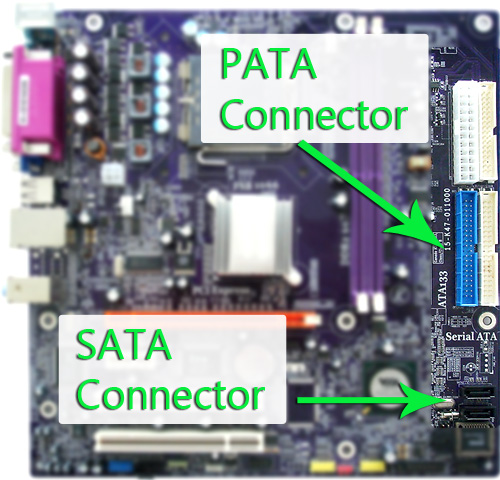
During the interim switch to SATA, motherboards generally featured both types of ports and controllers. One PATA port can control up to two legacy parallel devices. SATA uses peer-to-peer technology, (rather than master/slave), so one of its ports controls one device. Motherboards are made with multiple SATA ports for accommodating generous amounts of data storage and optional RAID configurations. SATA devices are also hot-swappable, unlike PATA devices.